Innovative Ways Teachers are Extending Language from GrapeSEED

Teachers are coming up with creative ways to extend language and concepts from GrapeSEED to other lessons throughout the day and help students make real-world connections, encouraging their comprehension of the words they are learning.

The  GrapeSEED Classroom Connections Training  and other professional development opportunities that are provided as part of the program give teachers ideas on how to reinforce what students learn during GrapeSEED time. Teachers can then come up with fun, engaging activities based on their students’ interests. Here are a few examples of how these amazing teachers are getting creative to motivate their young learners.

Buckeye Elementary School in Salem, OH

Kindergarten, first grade and second grade students at Buckeye Elementary in Salem, Ohio recently finished Unit 3 of GrapeSEED and celebrated with a “Black Party”. The children took part in activities and enjoyed yummy black-colored treats in honor of GrapeSEED’s Shared Reading Big Book  Black.

Mrs. Jennifer Andres, one of the outstanding teachers at Buckeye Elementary, incorporated a quick and simple prop during her Unit 2 lesson with her First Grade Pull-Out class!

Props are a great way to apply a concept to the real world and promote student comprehension.

Carman-Ainsworth Community Schools in Michigan

Carman-Ainsworth Interventionist, Mallory MacDermaid, used props to help build schema and add variety to the Big Book ‘Black’! There were ants, pants, hats, cats…even hair and an adorable tiny black chair that Miss MacDermaid painted herself. Thanks for going the extra mile!

Clintondale Community Schools in Michigan

Ms. Barachkov’s Kindergarten students at Robbie Hall Parker Elementary School painted everything green to show their love of GrapeSEED Unit 4 Shared Reading Big Book  Green !

Also at Robbie Hall Parker Elementary, Mrs. Frank’s Kindergarten students practiced making high frequency words in a hands-on, age-appropriate fashion during Work Station time, using GrapeSEED Shared Reading Poems as the platform for learning!

Do these preschool students like red? Yes, they do! Michelle Roehl’s students at Robbie Hall Parker Elementary loved taking the language from Unit 1 of GrapeSEED into their Art Center!

Former first grade teacher and current principal at Clintondale Community Schools, Mrs. Shannon King used GrapeSEED to support her students with their guided reading levels. She asked students to find words in their guided reading level books, write them on post-it notes, and then circle the letter combinations they learned from GrapeSEED. During Readers Workshop time, the students posted their notes under the GrapeSEED multi-letter phonogram cards hanging on the wall.


May 4, 2026
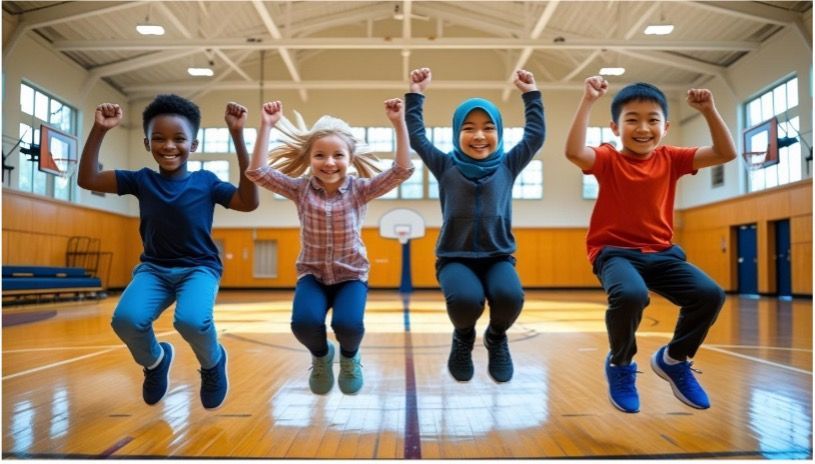
For teachers of multilingual learners, one of the most powerful tools for teaching English is something you already use every day: your body! Movement and physicality can unlock understanding and make language memorable for learners. One highly effective approach is Total Physical Response (TPR) , a method developed by Dr. James Asher that connects language with physical actions. What is Total Physical Response (TPR)? TPR is a teaching method where teachers give commands in English and students respond with physical actions. For example, when you say, "Stand up" or "Open the book," learners act it out. This approach mirrors how children learn their first language—through listening and doing before speaking. Discover how using movement and physical actions can make English come alive for multilingual learners. This short guide shows you how Total Physical Response (TPR) builds confidence, comprehension, and classroom energy—without needing any extra materials Why Use TPR? Supports comprehension : Physical actions give students visual and kinesthetic clues to understand meaning. Reduces stress : There’s no pressure to speak right away. Learners can participate by simply listening and moving. Builds memory : The body helps the brain remember. Actions anchor vocabulary and structures in long-term memory. Engages learners : Movement keeps energy high and focuses attention, especially with younger students or those new to English. Discover how using movement and physical actions can make English come alive for multilingual learners. This short guide shows you how Total Physical Response (TPR) builds confidence, comprehension, and classroom energy—without needing any extra materials. How to Use TPR in the Classroom Start simple : Begin with everyday commands—sit down, stand up, raise your hand, touch your nose. Demonstrate each one clearly. Repeat and vary : Use repetition but change the order or speed to keep it fun. Add new vocabulary : Introduce verbs, classroom objects, or actions related to topics—run, jump, draw, point to the window. Involve students : Let them give commands once they’re ready. This encourages speaking without pressure. Use it across subjects : Combine TPR with songs, stories, or content lessons like science and math to support language across the curriculum. Movement is not just a break from learning—it is learning. When student teachers use TPR and physicality in English instruction, they make language come alive. Whether you're teaching young learners or newcomers of any age, using your body to teach builds confidence, comprehension, and connection. So next time you plan a lesson, don’t just say it— show it, move it, and live it . GrapeSEED’s Daily Lesson Plans each include movement called “Action Activities”. Learn more about these Action Activities, our other components, and how to get started with GrapeSEED in your classroom !
April 20, 2026
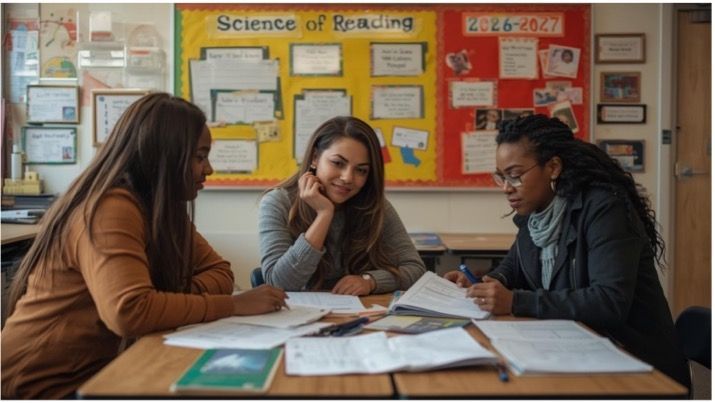
At this point in April, you’re surely juggling the familiar mix of testing calendars, field trips, restless learners, and the quiet awareness that the school year is nearing its close. It can truly feel like April showers are happening… literally and figuratively! And if you teach multilingual learners, this time of year often raises an important realization: language growth takes time and starts earlier than we think. So that being said, the month of April is a powerful time to pause and ask, ‘What foundations do we want firmly in place by next fall?’ Schools beginning curriculum conversations now are better positioned to support students from the very first weeks of the 2026–2027 school year, rather than playing catch-up later. As you reflect on next year’s goals and this year’s progress, you many notice that the students who struggled were likely those still developing key foundational skills—listening, speaking, sound awareness. GrapeSEED addresses this gap directly by focusing first on oral language , a key pillar of the Science of Reading . Rather than pushing print too early, GrapeSEED builds: · Deep listening comprehension · Accurate pronunciation and sound discrimination · Vocabulary and sentence patterns · Confidence using language both socially and academically These skills aren’t extras; they’re prerequisites for reading, writing, and future success. GrapeSEED’s structured, research-aligned approach gives schools a way to end the year with clarity and move into future planning with purpose. Professional learning, implementation timelines, and budgeting feel far less overwhelming when decisions are made with intention. Spring showers may signal the end of one school year, but they also prepare the ground for what comes next. With the right English foundation in place, students don’t just advance…they thrive. If 2026–2027 is on your mind, just click here and discover what GrapeSEED can do for your students.
April 6, 2026
Spring brings fresh beginnings, longer days, lighter coats, and a sense that what we do now shapes what comes next. In our schools, spring is also a season of reflection and planning. Yes, the school year is winding down for children, but the questions are just beginning for us adults: What worked? What didn’t? How can we do better for our newest learners next year? For schools welcoming young newcomer students, these questions carry extra weight. Early English acquisition isn’t something to “figure out later.” It’s foundational. When children build strong listening comprehension, oral language, and phonological awareness early, everything else…reading, writing, confidence…has a place to grow! That’s where GrapeSEED English for Children fits naturally into spring planning. GrapeSEED is built for young learners acquiring English , especially those who need language before they can access reading. Through carefully sequenced songs, stories, repetition, and joyful interaction, students develop the building blocks of language in a way that is both engaging and research based. Importantly, GrapeSEED aligns strongly with the Science of Reading . Students develop: Phonological awareness through daily exposure to sounds Oral language and vocabulary through rich, repeated input Listening comprehension before decoding and print expectations Automaticity and fluency through routines and meaningful repetition For students, this ‘oral language first’ pathway isn’t just helpful; it’s essential. If you’re reading this, you’re likely well aware that waiting until fall to investigate and implement something new often means rushing decisions, limited training time, and missed opportunities to start strong. That’s why it’s SO smart to use spring as the time of year to begin budgeting and exploring curriculum options like GrapeSEED for the 2026–2027 school year. As the world blooms outside AND inside, spring invites us to plant something that will last…language that grows with children, supports literacy, and helps every student feel successful from day one! Now is the season to plant the seeds. 🌱
March 16, 2026
March is Reading Month, which means classrooms everywhere are buzzing with read-alouds, favorite characters, cozy corners, and that unmistakable joy that comes when children realize: “Hey… I can read this!” For educators working with very young English learners, March is also a powerful reminder that strong readers don’t just magically appear in third grade—they’re built intentionally, joyfully, and early. Reading Starts Long Before Decoding When we think about reading success, it’s tempting to jump straight to phonics charts, sound walls and sight word lists. But for young ESL students, reading success starts even earlier, with listening, speaking, rhythm, repetition, and meaningful language experiences .  For example, before a child can read The Very Hungry Caterpillar, they need to understand words like apple, hungry, more, and finished. Before they can answer comprehension questions, they need confidence using language out loud. High-quality English acquisition lessons lay this crucial foundation by immersing students in rich, engaging oral language every single day. Why “Early” Really Matters Early childhood is a language goldmine. Young learners’ brains are wired for language acquisition, especially when lessons are developmentally appropriate, multi-sensory, and consistent. When English acquisition begins early and is delivered with intention, students don’t just learn English…they own it. For teachers, this looks like students joyfully echoing phrases, retelling stories with confidence, and recognizing familiar patterns in songs and poems. For administrators, it shows up as smoother transitions into upper grades, stronger literacy data, and fewer gaps to remediate later on. (Believe me, future you is very thankful.) Reading Month = Language Celebration March doesn’t have to be about “more work.” It can be about more joy . Songs that turn into stories. Stories that spark conversation. Conversation that strengthens comprehension. It’s a beautiful cycle—and one that works especially well when English instruction is systematic, playful, and grounded in how children actually learn language. Quality English acquisition supports reading month goals not by rushing students to read sooner, but by making sure they are truly ready when the time comes. This March, as we celebrate books and reading milestones, let’s also celebrate the language journeys that make those milestones possible. Because when we invest early, read often, and teach intentionally, we’re not just growing readers…we’re growing confident communicators for years to come. Happy Reading Month! If you’re looking for an English oral language acquisition curriculum that is designed for young learners and brand-new newcomers, look no further…you’ve found us! Just click below to learn more about getting started with GrapeSEED at your school!
Show More