Dear Teachers: This is Your Year!

Ready or not... the new school year is here!
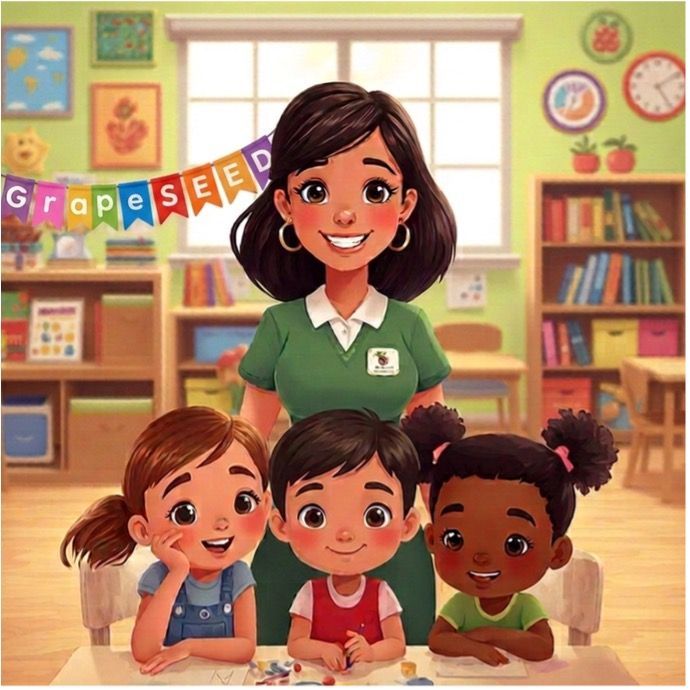
There's something magical about the first few weeks of school; fresh boxes of crayons, shiny backpacks, touches of new classroom décor, and maybe a few butterflies in your stomach, too!


Whether this is your very first year teaching GrapeSEED or you're a seasoned pro, the beginning of the year is the perfect time to set the stage for joyful, meaningful language acquisition. Here are a few friendly reminders to help you get off to a fantastic start:


Start with Connection


Before students can confidently take on language, they need to feel comfortable using it with you. Learn your students’ names, celebrate their efforts, laugh together, and create a classroom where every child knows it's okay to make mistakes. Those little moments of connection build big confidence.


Turn Up the Fun


Don't be afraid to sing a little louder, act a little sillier, or dance a little bigger! GrapeSEED lessons are designed to be interactive because children learn best when they're engaged. Your enthusiasm gives students permission to jump in and have fun, too.


Trust the Process


It can be tempting to rush ahead or wonder if students are "getting it." They are! Every story, song, action activity, shared reading big book or poem, and conversation is carefully designed to build language naturally over time. Keep following your daily lesson plans, revisit familiar language often, and let the curriculum do what it was created to do.


Did a quiet student answer a question today? Did someone sing along for the very first time? Did a child use a new expression without being prompted? Celebrate it! Language acquisition isn't about perfection…it's about progress. Every brave attempt deserves a smile, a high-five, or an enthusiastic "You did it!"


Consistency Is Your Superpower


Life gets busy! Fire drills are practiced, assemblies happen. field trips pop up and schedules change. Whenever possible, protect your GrapeSEED time.  Those consistent daily lessons create the repetition and meaningful practice that help language really stick.


Be Patient—Amazing Things Are Happening


Sometimes it feels like students are simply listening...and listening...and listening. Then one day, almost out of nowhere, they're speaking! That's the beauty of language acquisition. Even when you can't see it, your students' brains are making connections every single day.


Never Forget the Difference You're Making


Yes, you're teaching English, but always remember that you're also building confidence, encouraging curiosity, creating joyful learning experiences, and opening doors to future opportunities. That's pretty amazing!


Every song you sing, every story you read, every smile you share, and every encouraging word you give matters.


Here's to an Amazing School Year!


We hope your classroom is filled with laughter, curious questions, joyful conversations, and plenty of those "I did it!" moments.


Thank you for everything you do to make GrapeSEED come alive for your students. We can't wait to see all the incredible language growth this year will bring.


Have a wonderful school year! We're cheering you and teachers all across the country & around the world on, every step of the way!


Not yet a GrapeSEED teacher yourself and would love to learn more?

Learn More Here
August 17, 2026
The first few weeks of school have always mattered, but this year they may be more important than ever!
#BackToSchool2026 #ClassroomCommunity #StudentBelonging #SEL #DifferentiatedInstruction #StudentEnga
August 3, 2026
The first few weeks of school have always mattered, but this year they may be more important than ever!
May 25, 2026
Kindergarten is a big step in a child’s learning journey. It’s a time of exciting growth, discovery, and new routines. For families and educators of PreK and Young 5s children—including multilingual learners—preparing for this transition can help set the stage for a confident and joyful start to school. What Does “Kindergarten Ready” Mean? Kindergarten readiness is more than knowing letters and numbers. It includes a wide range of skills that help children feel safe, connected, and capable in a classroom environment. These skills include: Social & Emotional Skills : Can your child follow directions, express emotions, take turns, and ask for help? Language & Communication : Are they comfortable speaking and listening, even in their home language? Early Literacy & Math : Can they recognize some letters, numbers, and perhaps write their name? Motor Skills : Can they hold a pencil, use scissors, and manage clothing zippers or buttons? Supporting Multilingual Learners Children who speak more than one language bring unique strengths to the classroom! Here’s how we can support them: Honor Their Home Language : Encourage families to keep speaking and reading in their home language. A strong foundation in one language supports learning in English. Build Vocabulary : Use real-life experiences—grocery shopping, playing at the park, cooking—to teach and repeat new words in both languages. Create a Welcoming Environment : Use visuals, gestures, and routines that help all children understand and participate.  Simple Ways to Prepare at Home Read Daily : Share books in any language. Talk about the pictures and ask questions. Practice Routines : Try morning and bedtime routines similar to what they’ll experience in kindergarten. Talk Often : Describe what you’re doing, ask open-ended questions, and give your child time to respond. Play Together : Board games, pretend play, puzzles, and outdoor play build thinking and social skills. A Partnership Between Home and School Kindergarten readiness is a team effort. When teachers and families work together—especially in support of multilingual learners—children gain the confidence to thrive. Each child develops at their own pace, and readiness is not about perfection, but progress. Let’s celebrate every small step on the path to kindergarten! At GrapeSEED, we’re all about supporting children as they develop and prepare for their own next steps in their education journeys. Learn more about us by clicking here and consider getting started today!
May 4, 2026
For teachers of multilingual learners, one of the most powerful tools for teaching English is something you already use every day: your body! Movement and physicality can unlock understanding and make language memorable for learners. One highly effective approach is Total Physical Response (TPR) , a method developed by Dr. James Asher that connects language with physical actions. What is Total Physical Response (TPR)? TPR is a teaching method where teachers give commands in English and students respond with physical actions. For example, when you say, "Stand up" or "Open the book," learners act it out. This approach mirrors how children learn their first language—through listening and doing before speaking. Discover how using movement and physical actions can make English come alive for multilingual learners. This short guide shows you how Total Physical Response (TPR) builds confidence, comprehension, and classroom energy—without needing any extra materials Why Use TPR? Supports comprehension : Physical actions give students visual and kinesthetic clues to understand meaning. Reduces stress : There’s no pressure to speak right away. Learners can participate by simply listening and moving. Builds memory : The body helps the brain remember. Actions anchor vocabulary and structures in long-term memory. Engages learners : Movement keeps energy high and focuses attention, especially with younger students or those new to English. Discover how using movement and physical actions can make English come alive for multilingual learners. This short guide shows you how Total Physical Response (TPR) builds confidence, comprehension, and classroom energy—without needing any extra materials. How to Use TPR in the Classroom Start simple : Begin with everyday commands—sit down, stand up, raise your hand, touch your nose. Demonstrate each one clearly. Repeat and vary : Use repetition but change the order or speed to keep it fun. Add new vocabulary : Introduce verbs, classroom objects, or actions related to topics—run, jump, draw, point to the window. Involve students : Let them give commands once they’re ready. This encourages speaking without pressure. Use it across subjects : Combine TPR with songs, stories, or content lessons like science and math to support language across the curriculum. Movement is not just a break from learning—it is learning. When student teachers use TPR and physicality in English instruction, they make language come alive. Whether you're teaching young learners or newcomers of any age, using your body to teach builds confidence, comprehension, and connection. So next time you plan a lesson, don’t just say it— show it, move it, and live it . GrapeSEED’s Daily Lesson Plans each include movement called “Action Activities”. Learn more about these Action Activities, our other components, and how to get started with GrapeSEED in your classroom !
Show More