Enter GrapeSEED!
GrapeSEED is an oral-language program designed around
repetition, meaningful interaction, movement, music, stories, and everyday communication. While it was originally created as an English language program, many of GrapeSEED’s instructional routines align beautifully with skills ABA professionals are already targeting.
Think of it as another tool in the communication toolbox!
From Targets to Real-Life Language
ABA therapists often break larger skills into measurable, teachable behaviors, and for good reason. But children also need opportunities to generalize those skills beyond a discrete teaching trial.
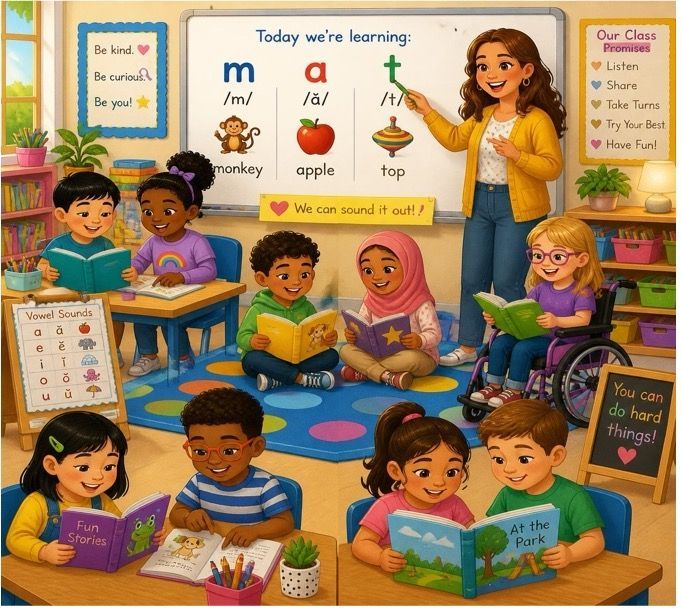
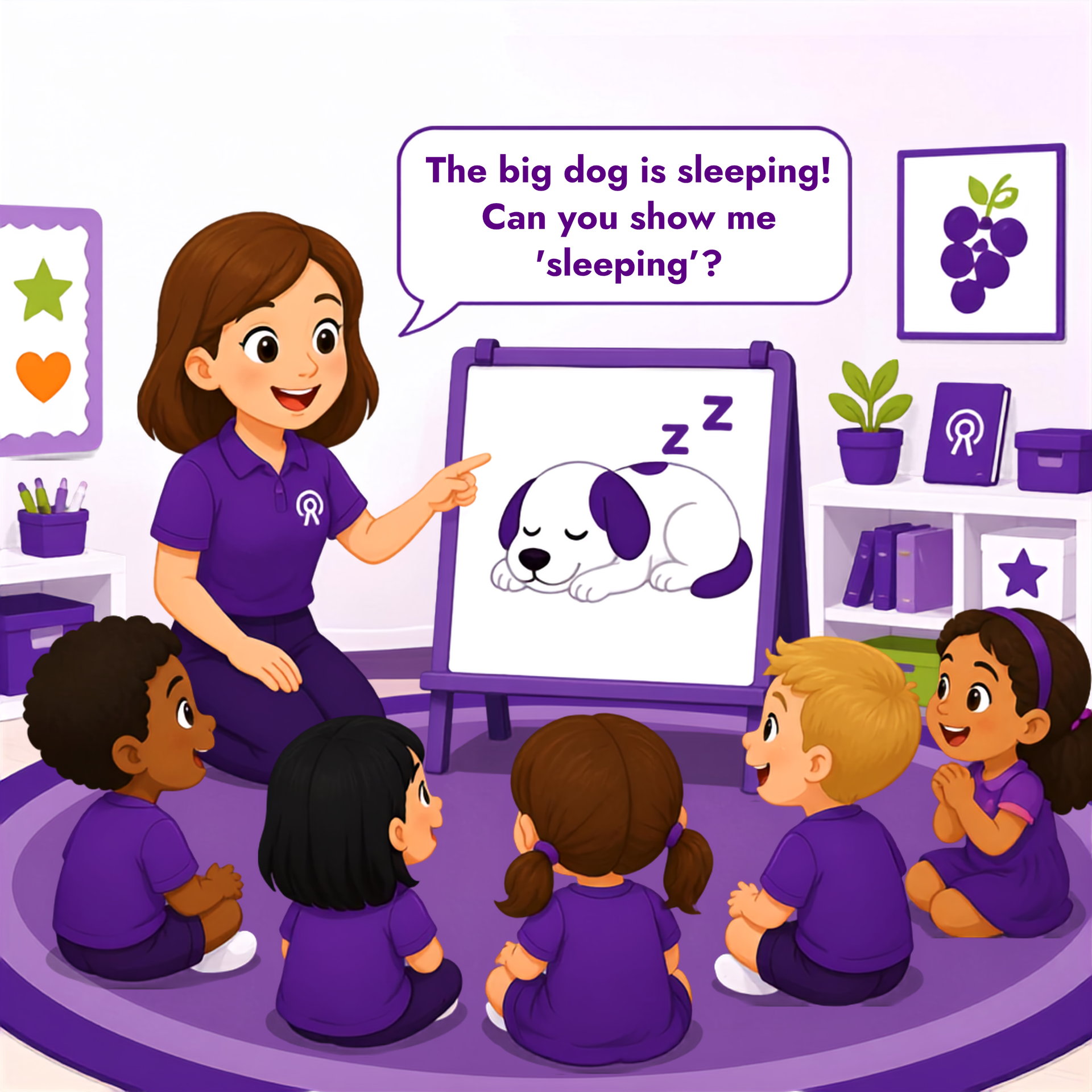
GrapeSEED provides repeated exposure to language through stories, action activities, shared reading, simple songs, vocabulary, and conversational expressions. A child might hear the same language pattern again and again, but in slightly different contexts.
A Different Kind of “Trial”
ABA professionals understand the importance of repetition. But repetition doesn't have to mean sitting at a table answering the same question twenty times!
Instead:
- A song can provide twenty opportunities to practice a phrase.
- A story can provide repeated opportunities to identify, answer, predict, and comment.
- A movement activity can create opportunities to follow directions, imitate actions, and respond to language.
- A familiar classroom routine can become a natural opportunity for communication.
Suddenly, the “trial” is embedded in something joy-filled!
What About Private Practice?
The possibilities definitely extend beyond the school setting!
For ABA clinics and private practitioners, GrapeSEED could provide a
structured, language-rich framework that therapists can incorporate into individual or small-group sessions. Activities can be adapted to individual communication goals while maintaining the natural, playful quality that keeps children engaged.
- For a child working on intraverbals, a familiar story might provide repeated opportunities to answer simple questions.
- For a child developing functional communication, songs and routines can create predictable opportunities to request or respond.
- For a child working on social interaction, group activities can provide practice with
turn-taking, attending, imitation, and reciprocal communication.
- The goal isn't to replace individualized ABA programming.
It's to add another environment in which communication skills can be practiced, strengthened, and generalized.
Because Communication Doesn't Happen in a Flashcard
Children don't learn to communicate simply by memorizing vocabulary. They learn through
hearing language, experiencing language, practicing language, and using language with other people.
That's the need GrapeSEED can help fill.
For ABA professionals, it offers something particularly valuable:
a predictable, highly repetitive, language-rich environment where communication targets can live inside meaningful activities.
Because sometimes the best language opportunity isn't another flashcard.
Sometimes it's a song.
A story.
A silly action.
A shared laugh.
Or one more chance to say, “Look!”
And that's where learning can really begin.
Are you ready to learn more about GrapeSEED?