GrapeSEED Helping Learners with Literacy for Life Goals in a Rural PA School District

January 20th, 2026

Southern Huntingdon County School District  (SHCSD) is a small rural district in south central Pennsylvania that serves approximately 1,300 K-12 students in four buildings. To reach the high school/middle school, about 75 miles west of the state’s capital, you must pass through the quaint, little town of Rockhill, featuring one stop light, a trolley museum, and one of the district’s three elementary schools. Lush mountains and well-manicured farms provide picturesque scenery for students as they travel, many by bus for over an hour to get to school. But long bus rides are not the biggest challenge for these students and SHCSD leadership.

In a community where 40% of students come from economically disadvantaged homes and approximately 33% of incoming kindergarten students had no experience in a classroom, district leadership recognized the elementary students’ need for improved oral language skills and literacy. Thus began the SHCSD literacy journey outlined here. Take a look:

2012-2013
school year:
SHCSD began implementing their Local Comprehensive Literacy Plan after applying for and receiving a multi-year  Keystones to Opportunity  (KtO) Grant from the  Pennsylvania Department of Education.
June 2014: SHCSD received two Keystones to Opportunity  Innovation Awards  at the PA Literacy Conference. While district officials were thrilled with this recognition, they knew that more work was needed to achieve their long term literacy goals.
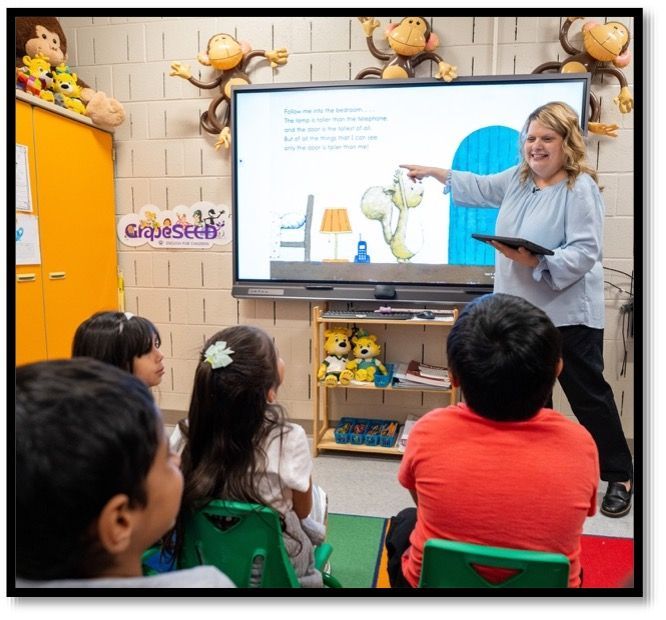
March 2015: SHCSD began using GrapeSEED as a supplement to its Language and Literacy curriculum in four kindergarten and first grade classrooms. After only a few weeks of using GrapeSEED, teachers and parents began recognizing how the program was helping all students. [My daughter] certainly loves that we listen in the car and watch at home. She is able to follow the words even for a short time but I am so excited. Her articulation with the songs and stories is pretty clear as well. Thank you for whatever you went through to implement this program. –           Mother of GrapeSEED kindergarten special needs student
June 2015: SHCSD received the  Accelerating Literacy Achievement Award at the PA Literacy Conference. This award is given to a KtO district demonstrating actual gains in student achievement in reading, writing, listening and speaking, while also closing the achievement gap by improving instruction and achievement for historically underperforming students.
2015-2016
school year:
Based on the success with GrapeSEED this past spring, SHCSD is planning to deploy GrapeSEED districtwide in all kindergarten and first grade classrooms, in a local preschool, and in several county Head Start classrooms beginning this fall.

Thanks to the support from the PA KtO program, the dedication and hard work of the SHCSD staff/ local community providers, and programs like GrapeSEED, SHCSD is well on its way to achieving their Literacy for Life goals throughout the SHCSD community.

Southern Huntingdon County School District, welcome to the GrapeSEED family!

January 20, 2026
January is the season of decluttering, but in schools, it’s about clearing space for what truly matters! This month’s blog explores how thoughtful organization supports multilingual learners and why strong language systems are worth keeping. A little clarity now can create momentum that lasts all year… and beyond!
December 11, 2025
The new year is a perfect time for reflection and renewal—not just for us, but for our students, too. After a long winter break, January offers a natural opportunity to revisit and reinforce classroom routines and procedures, especially in multilingual classrooms where clarity and consistency are key to helping all students feel secure and successful. For multilingual learners, routines are more than just classroom management—they provide language-rich structures that support understanding, reduce anxiety, and foster confidence. Whether students are newcomers or have been learning English for years, a clear and predictable environment helps them focus on learning rather than guessing what’s expected. Start the month by gently reviewing procedures: entering the classroom, transitioning between activities, participating in group work, asking for help, and using classroom materials. Model each step and invite students to demonstrate, using visuals, gestures, and multilingual supports when possible. Pair verbal directions with pictures or sentence stems to help students connect words with actions. This not only aids comprehension, it builds community and shared responsibility. Remember, reviewing routines isn’t about enforcing rules—it’s about resetting the tone for a peaceful, productive, and joyful classroom. Make space for students to share what helps them learn best and celebrate the positive habits they already bring with them. By investing time in January to revisit expectations with warmth and intention, you're setting the stage for a second half of the school year filled with growth, laughter, and learning—for every student, in every language.
December 2, 2025
In today’s classrooms, elementary school teachers juggle countless responsibilities—planning engaging lessons, managing behavior, communicating with families, and differentiating instruction for every learner. Fortunately, Artificial Intelligence (AI) is opening up a world of support tools that can help educators reclaim valuable time while still meeting the diverse needs of their students. Lesson Planning, Simplified AI tools and other educator-focused platforms can generate customized, standards-aligned lesson plans in minutes. Whether you're teaching reading comprehension, performing science experiments, or developing math centers, AI can help you brainstorm activities, create differentiated tasks, and suggest formative assessments—all tailored to your students’ grade level and learning goals. Behavior Intervention Plans Made Easier Creating thoughtful, individualized behavior intervention plans (BIPs) often requires collaboration and time that’s hard to find. With the right prompts, AI can assist by generating plan templates, suggesting positive reinforcement strategies, and even helping you write goal-specific language that’s clear and professional. This allows for quicker implementation and better support for student growth. Boosting Communication with Families Need to send home a weekly newsletter, a classroom update, or a quick note in family-friendly language? AI can help you write clear, respectful, and engaging messages in seconds—and even translate them into multiple languages. This promotes stronger school-home connections without adding to your workload. More Than Just Words AI isn’t just about writing. It can generate visual aids, adapt texts for different reading levels, offer creative ideas for classroom themes, or even draft rubrics and anchor charts. When used responsibly, AI becomes a teaching assistant in your pocket—offering fresh ideas and saving you time. A Word of Caution—and Empowerment AI isn’t a magic wand, and it doesn’t replace the care, creativity, and wisdom that teachers bring to the classroom. But when used thoughtfully, it can remove some of the mental load and help you focus on what matters most: building relationships, inspiring learners, and making a lasting impact. AI can be a game-changing tool for educators—not by replacing the human touch, but by enhancing it. With the right approach, you can use AI to create, communicate, and collaborate more efficiently—without sacrificing quality. Just as AI can support teachers in the classroom, GrapeSEED does the same. From intentionally designed lesson plans to materials at your fingertips, to a results driven, joy filled curriculum for your language learner students, GrapeSEED has it all. Click here to learn more !
November 3, 2025
If you’ve ever looked at your lesson plans and thought, “There’s no way I can fit all this in,” you’re not alone. Teachers today face an ever-growing list of standards, assessments, and initiatives, all while striving to create joyful, meaningful learning experiences for young children. The struggle is real! So how can we honor curriculum expectations without overwhelming ourselves or our students? Read on for ideas and strategies! Start with What Matters Most Not everything carries equal weight. Identify the skills and concepts your students truly need to succeed, both academically and developmentally. Prioritize depth over breadth when possible. A well-understood concept is more valuable than one that’s been rushed and checked off a list. Integrate Across Subject Areas Look for ways to blend content. A science lesson can include reading comprehension. A writing activity can connect to social studies. Integration allows for richer, more efficient learning and saves time while deepening student understanding. Protect Time for Play, Talk, and Joy Children learn best when they are engaged and emotionally connected to content. Carve out time for class discussions, movement, and creative exploration. These “non-academic” moments often bring about the deepest learning and are critical for social-emotional development. Be Realistic, Not Perfect It’s okay if not every lesson goes as planned or every objective is met on the first try. Focus on consistent growth, not perfection. Trust your professional judgment. After all, you know your students best. Support One Another Collaboration is key. Talk with teammates about what’s working, what can be scaled back, and how to share the load. A balanced curriculum starts with a balanced teacher, and that balance often comes from working together. Remember, you aren’t just covering content, you’re helping to shape children’s lives. When we prioritize purposeful, joyful learning over packing it all in, we give students (and ourselves) what truly matters most.. To learn how GrapeSEED English for Children saves teachers time so that they can focus on what is important, click here today!
Show More