The Magic of Music in the Classroom

January 20th, 2026

Music. It has the power to bring tears to our eyes, put a skip in our steps, and fill our hearts with gladness. Throughout the pandemic we all saw countless clips of communities working toward healing their pain and shining a light in the darkness through impromptu balcony concerts and preplanned sing-alongs. If you’ve ever walked down the halls of an elementary school, chances are high that you heard some form of music wafting from at least one classroom along the way. Whether its purpose was to was to provide a calming, peaceful background sound, or a current hit to get students up and moving during a ‘brain-break’, music is an amazing tool. So let’s try it!  Are you able to finish this jingle?

‘Ba-da-ba-ba-baaa, I’m _______ __’

Chances are you were singing it in your head, “Ba-da-ba-ba-baaa, I’m lovin’ it’! You may have even visualized the golden arches in your mind or got a sudden taste for fries. Research shows that children (and adults, too!) have an easier time remembering words and concepts when they’re put to a tune.

Needless to say, amazing things happen when we hear music! Music and singing stimulates more parts of the brain than any other human function, as it activates both sides of the brain, rather than just one.

  • The auditory cortex, part of the temporal lobe on both sides of the brain, analyzes things like volume, pitch, speed, melody, and rhythm.
  • In the cerebrum, the frontal gyrus recalls memories to help you remember lyrics and sounds, while the dorsolateral frontal cortex helps you visualize the music and recall images associated with the sounds.
  • Other areas, including the cerebellum in the back of the brain, work together to control rhythmic movement in the body in response to the music.

This collaboration of the different areas of the brain enables us to feel that emotion, recall that visual memory, tap our feet to the beat, and remember those catchy lyrics (maybe even getting them stuck playing in your head over and over again!).

Interesting fact…research in the study of cognitive neuroscience of music, shows us that the areas of the brain that are activated when listening to linguistic and melodic phrases are almost identical. This may not be surprising when you consider that language itself has musical qualities, like intonation and pitch. For example, think about how we can convey different meanings and elicit different emotions with the simple rise and fall of our voices. My grandmother used to say “It’s not what you say, it’s how you say it”, and I think that applies here!

For English language learners, music and song has been shown to speed up the language acquisition process.  Besides triggering memory, music easily grabs and holds the attention of students, while the physical act of singing helps with pronunciation and comprehension; the rhythm and melody naturally encouraging fluency and articulation.

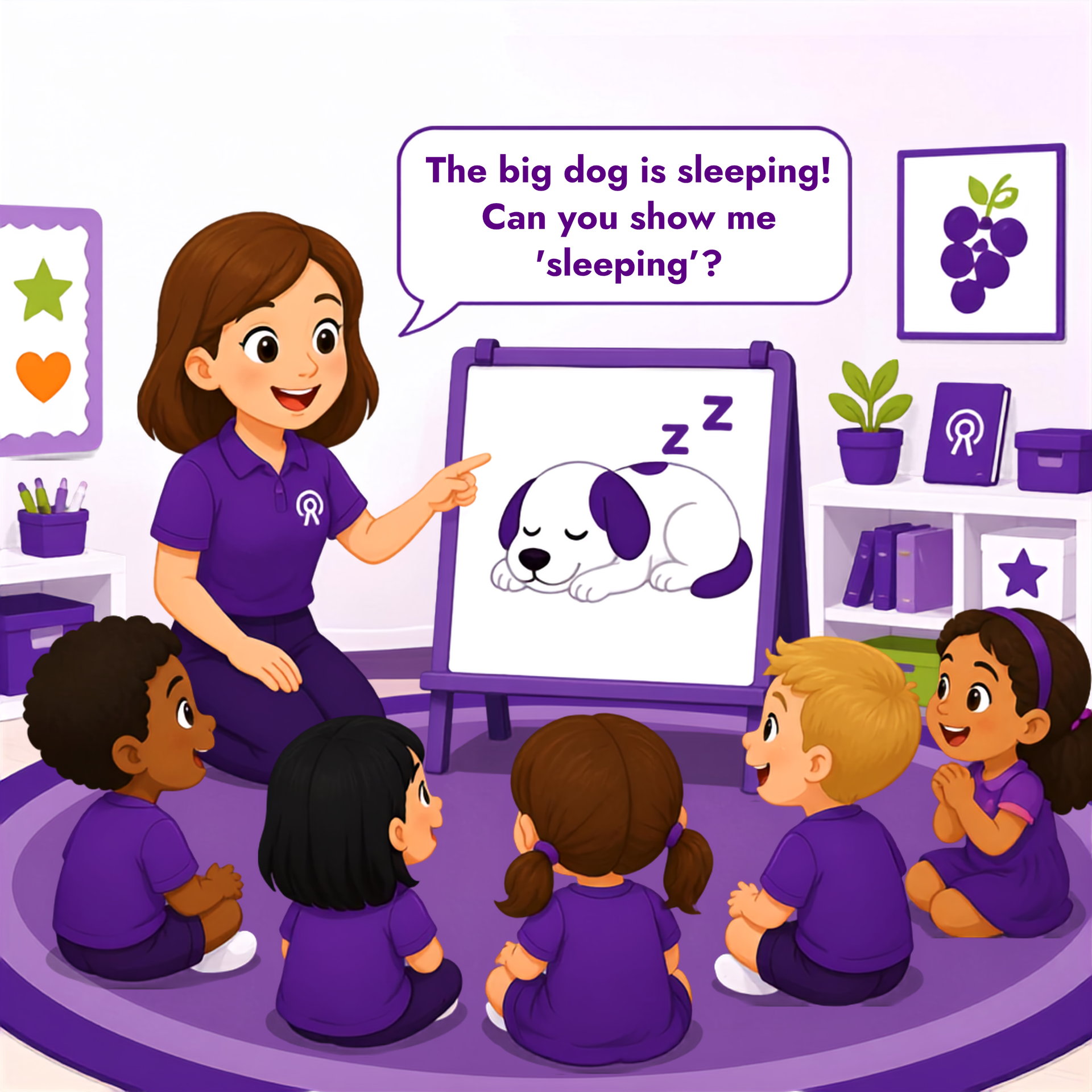
The developers of GrapeSEED have leveraged the power of music in language acquisition and have incorporated tunes and singing throughout the instructional materials.

Just click the image below to hear the tune to GrapeSEED’s Unit One Big Book ‘Red’ as it comes to life when put to a catchy melody.

So listen to music and sing!

Sing in the shower, sing in the car and most of all sing in the classroom. You’ll be glad you did!

Want more information about GrapeSEED’s best practices for English Language Learners? Contact us!
January 20, 2026
January is the season of decluttering, but in schools, it’s about clearing space for what truly matters! This month’s blog explores how thoughtful organization supports multilingual learners and why strong language systems are worth keeping. A little clarity now can create momentum that lasts all year… and beyond!
December 11, 2025
The new year is a perfect time for reflection and renewal—not just for us, but for our students, too. After a long winter break, January offers a natural opportunity to revisit and reinforce classroom routines and procedures, especially in multilingual classrooms where clarity and consistency are key to helping all students feel secure and successful. For multilingual learners, routines are more than just classroom management—they provide language-rich structures that support understanding, reduce anxiety, and foster confidence. Whether students are newcomers or have been learning English for years, a clear and predictable environment helps them focus on learning rather than guessing what’s expected. Start the month by gently reviewing procedures: entering the classroom, transitioning between activities, participating in group work, asking for help, and using classroom materials. Model each step and invite students to demonstrate, using visuals, gestures, and multilingual supports when possible. Pair verbal directions with pictures or sentence stems to help students connect words with actions. This not only aids comprehension, it builds community and shared responsibility. Remember, reviewing routines isn’t about enforcing rules—it’s about resetting the tone for a peaceful, productive, and joyful classroom. Make space for students to share what helps them learn best and celebrate the positive habits they already bring with them. By investing time in January to revisit expectations with warmth and intention, you're setting the stage for a second half of the school year filled with growth, laughter, and learning—for every student, in every language.
December 2, 2025
In today’s classrooms, elementary school teachers juggle countless responsibilities—planning engaging lessons, managing behavior, communicating with families, and differentiating instruction for every learner. Fortunately, Artificial Intelligence (AI) is opening up a world of support tools that can help educators reclaim valuable time while still meeting the diverse needs of their students. Lesson Planning, Simplified AI tools and other educator-focused platforms can generate customized, standards-aligned lesson plans in minutes. Whether you're teaching reading comprehension, performing science experiments, or developing math centers, AI can help you brainstorm activities, create differentiated tasks, and suggest formative assessments—all tailored to your students’ grade level and learning goals. Behavior Intervention Plans Made Easier Creating thoughtful, individualized behavior intervention plans (BIPs) often requires collaboration and time that’s hard to find. With the right prompts, AI can assist by generating plan templates, suggesting positive reinforcement strategies, and even helping you write goal-specific language that’s clear and professional. This allows for quicker implementation and better support for student growth. Boosting Communication with Families Need to send home a weekly newsletter, a classroom update, or a quick note in family-friendly language? AI can help you write clear, respectful, and engaging messages in seconds—and even translate them into multiple languages. This promotes stronger school-home connections without adding to your workload. More Than Just Words AI isn’t just about writing. It can generate visual aids, adapt texts for different reading levels, offer creative ideas for classroom themes, or even draft rubrics and anchor charts. When used responsibly, AI becomes a teaching assistant in your pocket—offering fresh ideas and saving you time. A Word of Caution—and Empowerment AI isn’t a magic wand, and it doesn’t replace the care, creativity, and wisdom that teachers bring to the classroom. But when used thoughtfully, it can remove some of the mental load and help you focus on what matters most: building relationships, inspiring learners, and making a lasting impact. AI can be a game-changing tool for educators—not by replacing the human touch, but by enhancing it. With the right approach, you can use AI to create, communicate, and collaborate more efficiently—without sacrificing quality. Just as AI can support teachers in the classroom, GrapeSEED does the same. From intentionally designed lesson plans to materials at your fingertips, to a results driven, joy filled curriculum for your language learner students, GrapeSEED has it all. Click here to learn more !
November 3, 2025
If you’ve ever looked at your lesson plans and thought, “There’s no way I can fit all this in,” you’re not alone. Teachers today face an ever-growing list of standards, assessments, and initiatives, all while striving to create joyful, meaningful learning experiences for young children. The struggle is real! So how can we honor curriculum expectations without overwhelming ourselves or our students? Read on for ideas and strategies! Start with What Matters Most Not everything carries equal weight. Identify the skills and concepts your students truly need to succeed, both academically and developmentally. Prioritize depth over breadth when possible. A well-understood concept is more valuable than one that’s been rushed and checked off a list. Integrate Across Subject Areas Look for ways to blend content. A science lesson can include reading comprehension. A writing activity can connect to social studies. Integration allows for richer, more efficient learning and saves time while deepening student understanding. Protect Time for Play, Talk, and Joy Children learn best when they are engaged and emotionally connected to content. Carve out time for class discussions, movement, and creative exploration. These “non-academic” moments often bring about the deepest learning and are critical for social-emotional development. Be Realistic, Not Perfect It’s okay if not every lesson goes as planned or every objective is met on the first try. Focus on consistent growth, not perfection. Trust your professional judgment. After all, you know your students best. Support One Another Collaboration is key. Talk with teammates about what’s working, what can be scaled back, and how to share the load. A balanced curriculum starts with a balanced teacher, and that balance often comes from working together. Remember, you aren’t just covering content, you’re helping to shape children’s lives. When we prioritize purposeful, joyful learning over packing it all in, we give students (and ourselves) what truly matters most.. To learn how GrapeSEED English for Children saves teachers time so that they can focus on what is important, click here today!
Show More